
Sink chip repair is what people first think about before getting it replaced. This could cost you a lot of money if you are looking in all the wrong places. It’s not just about low repair costs but also whether the professionals you hire are experienced and well-equipped for the job. Bath-Brite gives you the peace of mind you deserve when it comes to sink repair alongside costs that won’t break the bank.
How does a sink chip repair work?
The repair process depends on the damaged area. A professional sink repair must follow these steps:
- Cleaning the surface:
The surface should be cleaned properly in order to prevent it from rotting anymore. It’s the process of removing the grease, scum, or scrubbing the dirt, providing a clear slate to work on.
- Resurfacing the fixture:
In this part, we fill in the damaged or concerned area which has been chipped and in need of repair. It is done by filling in chips, cracks, or deep scratches.
- Smoothing the surface:
This process is performed by roughing up the old surface to help it smoothen to create an even surface that can be sanded easily.
- Refinishing the surface:
This is the final touch to fix the surface and the look of the sink. This can retouch the surface if any scratches or damage remain.
How is a chipped sink caused?
A chipped sink is caused by a heavy bottle or toiletries falling hard on a sink, causing it to break or chip; constant exposure to water, cleaning chemicals, and products; or temperature changes.
Common types of sink damage include:
- Small chips along the edge or basin
- Hairline cracks
- Scratches and scuff marks
- Discolouration and stains
- Worn or dull finishes
- Peeling or damaged coatings
Even a small amount of damage shouldn’t be ignored, as it can cause the sink to break further or leak, resulting in a bigger issue as well as an expense, so it must be treated at all costs.
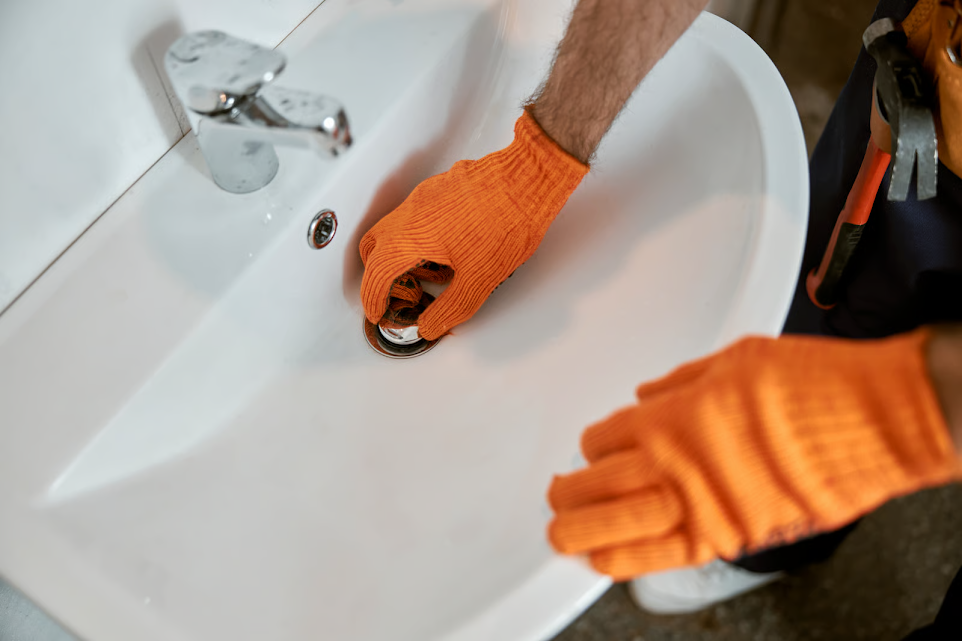
Different Sink Materials:
Sinks for kitchens and bathrooms come in different materials as follows:
- Ceramic/porcelain: smooth, traditional, stain-resistant.
- Granite/composite: strong, scratch-resistant, modern appearance.
- Cast iron with enamel: very durable and heavy, with a glossy finish.
- Glass: stylish and modern, but can be more fragile.
- Copper: Attractive, naturally antimicrobial, but develops a patina over time.
- Stone/marble: luxurious and unique, but needs more maintenance.
- Acrylic: lightweight and relatively inexpensive, but can scratch more easily.
Can the sink really be repaired without replacing:
The answer is YES! In many cases, a sink can be repaired and restored without the need for a costly replacement.
So, how can this be done? Through professional sink resurfacing and sink refinishing
But what exactly are these processes?
Sink resurfacing is the process of restoring the sink’s surface to improve its appearance and condition. Sink refinishing involves repairing imperfections and applying a new finish to give the sink a fresh, renewed look. The best part? You don’t necessarily need to replace your sink. By hiring a professional refinishing and resurfacing service, you can restore the existing sink and give it a like-new appearance without the hassle and expense of a full replacement.
Sink Repair or Sink Replacement?
Both sink repair and sink replacement have their own advantages and disadvantages. The right choice depends on the condition of your sink, your budget, and your long-term needs.
| Factors | Sink Repairing | Sink Replacement |
| Best For | Small and minor Cracks | Deep and dense cracks |
| Cost | More affordable | More expensive |
| Time | Generally quicker | Usually takes longer |
| Appearance | Restores the damaged area | Gives you a new sink |
| Lifespan | Extends the lifespan of an existing sink | Provides a new longer lifespan |
| Maintenance | May require more maintenance | Usually requires less maintenance |
Conclusion:
The right solution ultimately depends on the sink’s material, the size and location of the damage, and its overall condition. While replacement may be necessary for sinks with severe cracks or structural damage, repairing and refinishing an otherwise sound sink is often a more affordable, quicker, and less disruptive option.
Instead of living with a damaged sink or replacing it unnecessarily, consider having it professionally assessed. Bath Brite can help restore your sink and give it a fresh, renewed finish providing a cost-effective and stress-free alternative to replacement.
Frequently Asked Questions:
Can a chipped sink be repaired?
Yes, it can be repaired by professionals depending on the size, location, shape, or kind of fixture.
Is it possible to replace a sink without replacing the countertop?
Yes, it is possible to replace a sink without replacing the countertop by taking the exact dimensions and installing it.
How to repair a chipped composite sink?
You can repair a chipped sink by cleaning, repairing, smoothing, and refinishing the surface.
What causes a sink to chip?
Heavy toiletries, constant exposure, and temperature changes cause the surface of the sink to chip.
Can an old sink be refurbished or repaired?
Yes, it can be refurbished and repaired, which is a better way of saving and utilising rather than replacing it.
